
Rooms are memory addresses
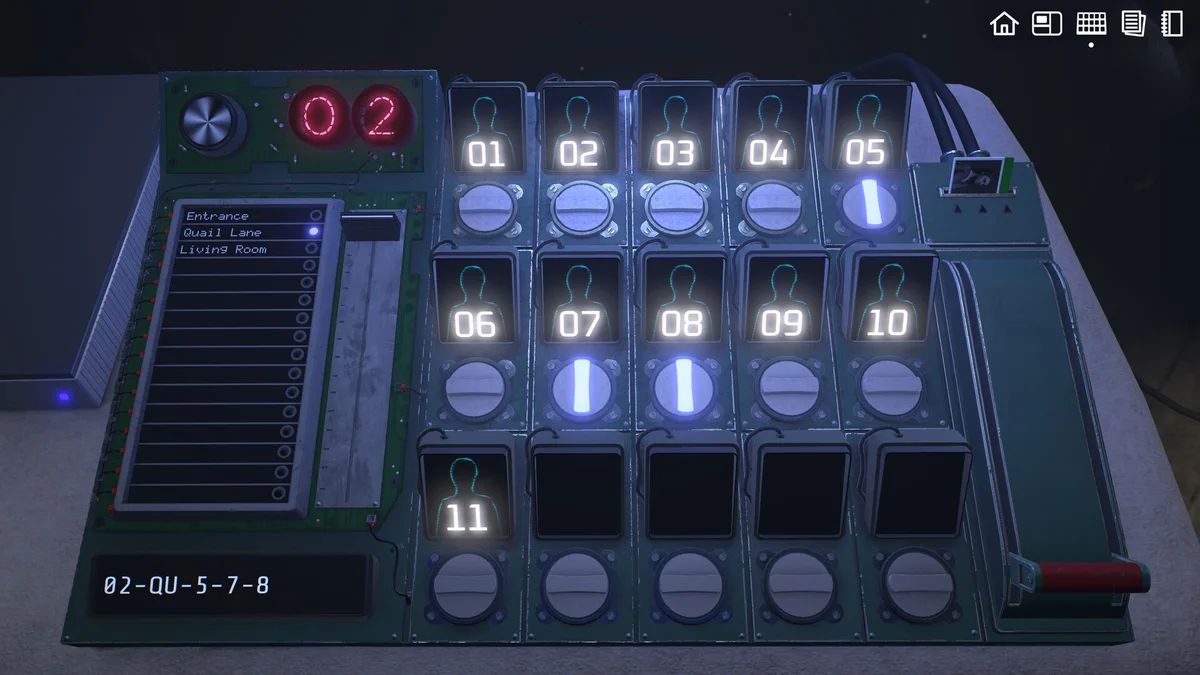
Rooms are memory addresses, not Metroidvania doors. You learn a two-letter token and request a scene only when dialogue gives you a reason to believe a memory exists there.
Public rooms EN, LI, DI, KI, ST, and BI appear early. Private bedrooms and the chapel appear when dialogue points upstairs or toward ritual space. Wintercote sits outside the main house loop late in historical lists. Quail Lane covers approach space early on.
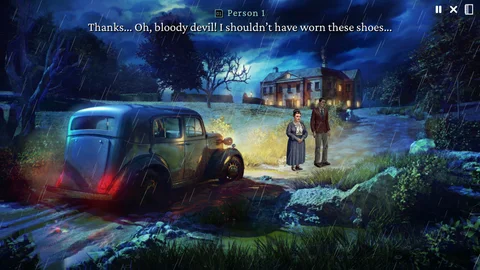
Quail Lane matters even if most of the night is indoors. Some investigation threads begin on the muddy track before the entrance hall, and ignoring QU early can stall triangulation practice.
Room code legend
EN Entrance | LI Living room | QU Quail Lane | ST Study | KI Kitchen | DI Dining Room | BI Billiard Room | CH Chapel | ED Eddie's Room | AT Attic | TO Tony's Room | MA Martha's Room | VI Victoria's Room | HE Helen's Room | OS Oswald's Room | WI Wintercote.
Private rooms ED, TO, MA, VI, HE, OS correspond to Eddie/Edmund, Tony, Martha, Victoria, Helen, and Oswald. Use them when a group scene fragments.
Print or pin the sixteen tokens beside your monitor for the first two hours. Typing speed matters less than not confusing VI Victoria with LI Living room under pressure.
Private room tokens double as identity hints — OS implies Oswald-related space — but you still confirm names in the notebook.
Investigation tips by zone
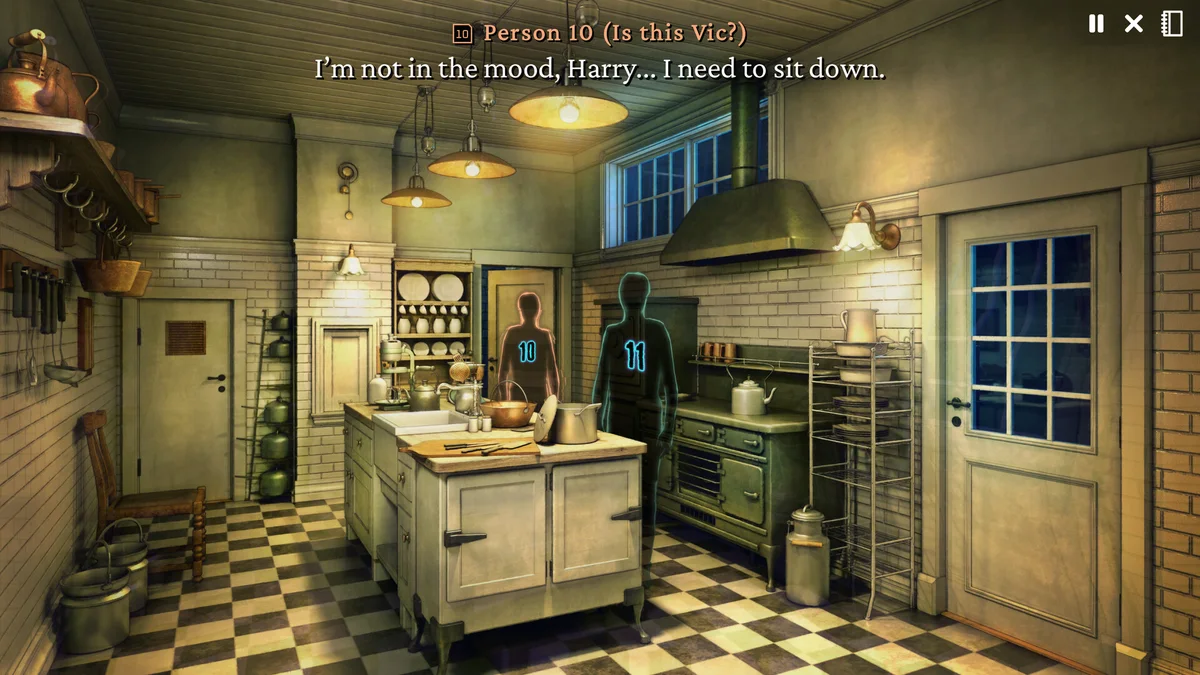
Living room and dining room carry the densest multi-cast evidence — excellent for photo matching once you have cards. Kitchen scenes expose staff routes and quieter pairings. Study scenes favor documents and two- or three-person plots. Attic scenes isolate tense pairings early and mid timeline.
Chapel is a late-period cluster. If you are still missing CH codes in the twenties periods, you are probably under-listening to ritual or name-related dialogue rather than missing a random room.
Study scenes favor documents and small groups. Kitchen scenes expose staff routes. Attic scenes isolate tense pairings. Use those biases when you are choosing which room to try next from a vague exit line.
When you are lost, return to EN and LI density. High-traffic rooms generate the exit lines that unlock quieter rooms.
Quick answers
FAQ
Is there an official interactive map?
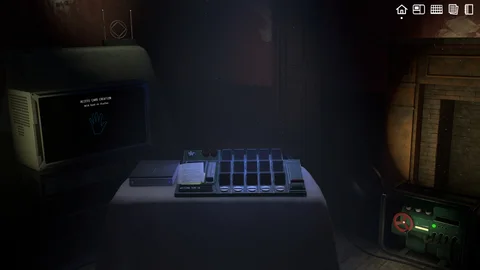
Official materials emphasize the machine interface over a tourist map with clickable rooms. Player legends like this page are the practical tool for building addresses during an active investigation session.
Do rooms change geometry between eras?
Memories change props and occupants while address codes stay stable. Expect damaged props or different furniture later without learning a second set of two-letter tokens for the same spaces.
Which rooms matter for achievements?
House Tour theming implies broad location coverage across public and private rooms. Include Wintercote in completionist passes instead of camping only in high-density living and dining codes for the entire cleanup.