
What you are actually doing
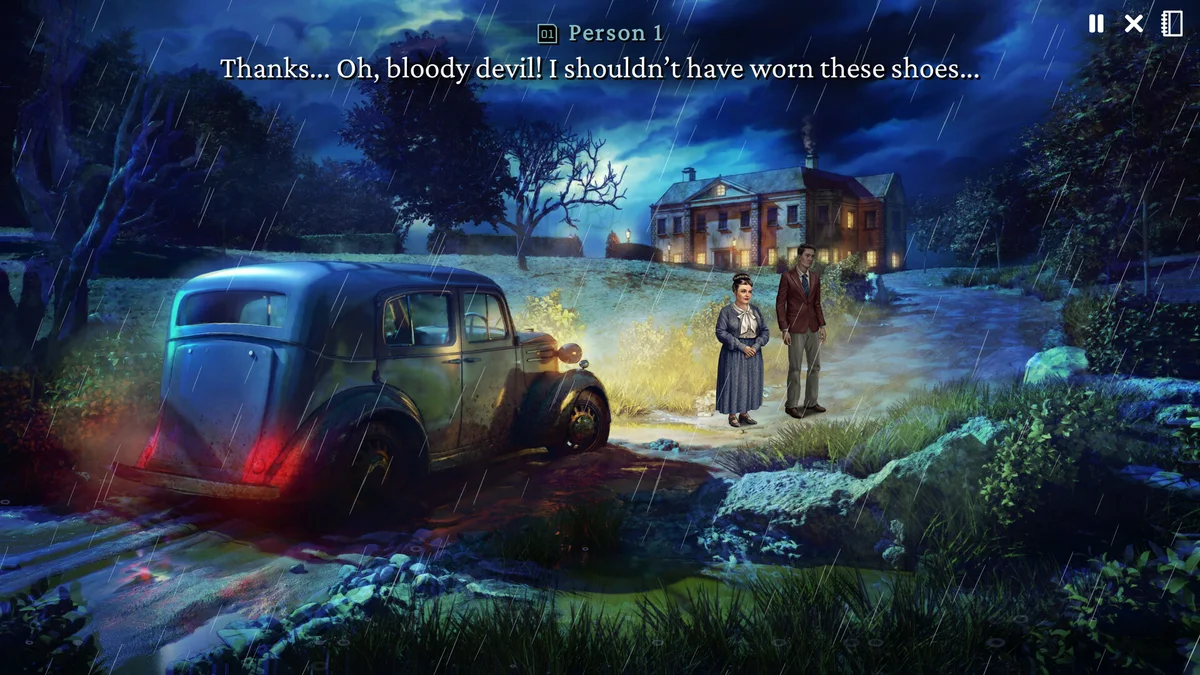
The Incident at Galley House is a deduction game. You play as Reya Beckon, a junior engineer at D&M, operating a Seance Machine that replays memory echoes from Galley House. Each successful code is a short visual-novel scene with full voice acting. Your job is to notice who is present, which room they occupy, what period of the night it is, and what they say about where they are going next.
The Steam store frames the premise clearly: on Sunday 7 March 1936 locals found a bloody aftermath in a house that had stood empty for decades, and nobody solved the case. The machine is your way back into those hours. A later keycard shifts the investigation into the present day around D&M staff and outside researchers.
Steam lists the game as a single-player adventure with full controller support, adjustable text size, color alternatives, custom volume, subtitles, and playable without timed input. That feature set matches a long listening and reading session rather than a twitch challenge. Budget real note-taking time.
Reviewers comparing the game to Obra Dinn-likes and Roottrees-likes are describing the note-taking loop, not a shared engine. Your practical takeaway is the same: write what you know, test one variable, and resist spoiler tables until a thread is truly blocked.
Triangulate before free-roaming codes
Before the machine accepts arbitrary room combinations, the game asks you to input an initial set of room codes to triangulate. Treat that as onboarding, not as a skippable menu. Once triangulation is done, you can attempt any code whose parts you believe you understand.
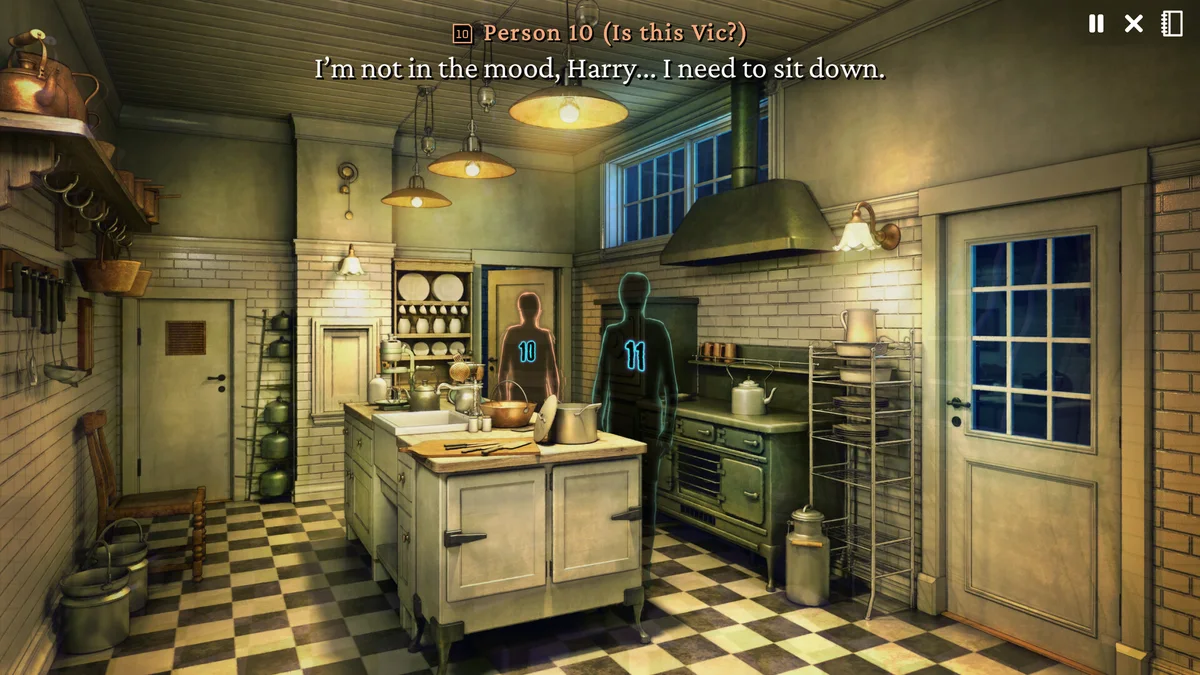
A code is assembled from a period index, a two-letter room code, and one or more person IDs. Early periods use single-digit person numbers for the 1936 cast. Modern periods use higher IDs such as 70 for Reya. Wrong codes are information: they tell you a combination is invalid, and some achievements even care about repeated mistakes.
Community launch guides and GameSpew's walkthrough both emphasize triangulation before free-form code entry. Treat failed codes as negative evidence: change one variable at a time so you know whether period, room, or person set was wrong.
If triangulation confuses you, stay on the room codes alone until the machine acknowledges calibration. Person IDs come next; dumping a full spoiler cast list before calibration only creates false confidence.
Confirm identities in the notebook, not only in your head
Characters begin as numbers. Names, photo cards, and animal monikers are unlockable confirmation layers. When you think you know who person 6 is, enter it in the notebook rather than relying on memory. Photo cards use animal monikers (Lark, Badger, Toad, and others) as a matching puzzle beside the voice and costume evidence.
Do not open a full spoiler code list on your first session unless you are completely stuck. Listen for exits and entrances: if someone says they are going to the kitchen, try the next period in KI with the IDs that should have moved. That soft-hint loop is the intended progression.
Photo monikers published beside many historical names include Lark, Badger, Toad, Hedgehog, Weasel, Raven, Pike, Goose, and Cod. They exist to sort cards, not to replace the notebook confirmation step that actually locks a name for later codes.
A useful paper layout is three columns — period, room, people — plus a fourth column for exit lines. That fourth column is what turns passive watching into hypothesis generation.
When to open this wiki's spoiler pages
Use the Seance Machine and scene-code system pages for mechanics without full answers. Open the 1936 or modern code lists only after you have exhausted dialogue leads or you are achievement-cleaning. The walkthrough hub separates those layers so you can stay spoiler-light.
Platform basics: Windows, macOS, and Linux; full controller support; Steam Cloud; Steam Achievements (15). Official store languages include English with full audio plus French, German, Japanese, and Simplified Chinese. Evil Trout rates the game suitable for players 14 and up and publishes content warnings on galley.house.
This site's walkthrough hub separates 1936 codes from modern codes because the keycard and ID ranges differ. Using the wrong list is the fastest way to think the game is broken when you are simply on the other era.
Achievement cleanup is the right time for full lists. Story understanding is the right time for soft hints. Mixing those goals on hour one is how people spoil their own mystery.
Quick answers
FAQ
Is this the same game as Type Help?
It is a full Steam remaster of William Rous's text game Type Help, rebuilt by Evil Trout Inc. with illustrated scenes, voice acting, a 3D memory interface, soundtrack, and new content. The deduction core remains, but presentation and some puzzles differ enough that finishing Type Help does not auto-solve every Steam scene or achievement.
Do I need to play scenes in chronological order?
After triangulation you may enter valid codes in any order. Chronological playback helps you understand the night as a timeline, yet the design expects jumps when dialogue points to a specific room or person. Use period order when confused, and free order when chasing one lead hard.
Should I use a controller or mouse?
Steam lists full controller support and keyboard/mouse both work. Choose whichever lets you assemble codes quickly and pause for notes. Many players type person IDs on a keyboard and navigate menus with a pad, but no achievement we verified requires a specific device.